Seal Not the Sayings
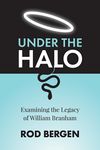
This article is a response to "CAB Lesson 1," taught by Trevor Emond on October 14, 2018, the opening session of a Church Age Book curriculum published at messageteacher.com.[1] All timestamps refer to that recording. We have also responded to a later sermon by the same teacher in Beautiful Is Not True.
Seal Not the Sayings
Trevor Emond opens his Church Age Book curriculum with an object lesson, and it is a good one.
He has a table lamp brought to the front of the church, draped in a bed sheet. He talks about art unveilings, the boring speeches, the mayor, the moment when everybody in the room stops caring about anything except what is under the cloth. Then he pulls the sheet off and says the word.
Apocalypse. You just witnessed the apocalypse of the Emond table lamp. You've witnessed an apocalypse. An unveiling. [24:36]
He is right about the word. Apokalypsis means uncovering. The book we call Revelation is named for the act of taking a cover off something, and the English title says the same thing in Latin dress. Most congregations hear "apocalypse" and think of the end of the world, and Emond is doing his people a service by correcting that.
He is also right about something bigger. Revelation matters. A doctrine that never moves from your head to your life is worth very little, and he says so with real force at [38:36]. I would sign my name to that paragraph.
So this article is not about whether the word means unveiling. It is about the next step, which is where the lesson turns, and about a claim he makes concerning the book his congregation is being handed.
The unveiling that had to stay veiled
Having established that apocalypse means uncovering, Emond faces an obvious problem. If the book is an uncovering, why has nobody understood it?
His answer runs from [26:03] to [32:21], and it is the load-bearing argument of the whole lesson. He proposes that God deliberately made the book unintelligible. He imagines a second unveiling, a sculpture of a tree with metal square leaves, where the cloth comes off and you still have no idea what you are looking at.
Then he supplies the motive [28:19]:
What would happen to the people in the first church age and second church age who knew, who would have known that their dispensation, that the power of their age was to be sacrificed, was to be put on the rack, was to be tortured, was to be killed for the name of Jesus Christ ... What if they understood what that meant before it happened? Would that have changed them?
And the conclusion [29:16]:
He's got to reveal what's going to happen. But he can't let everyone understand that revelation until the right time. So what does he have to do? He has to then put things in revelations in such a way that we don't understand them necessarily.
God hid it, on purpose, so the early Christians would not know what was coming. Then Revelation 10:7 supplies the man who takes the second cover off.
Let me test that against the book itself, using the verses Trevor Emond read aloud to his own congregation twenty minutes earlier.
"To show unto his servants"
He read Revelation 1:1 at [5:20]. The book was given by God to Jesus Christ "to show unto his servants things which must shortly come to pass."
To show. The Greek is deixai, to point out, to make visible. That is stated in the first sentence as the purpose of the entire book, and concealment is its opposite.
"Blessed is he that readeth"
He read verse 3 as well, and made a lovely observation about it [5:45]: "We're fulfilling scripture right now. And you're blessed."
Blessed is he that readeth, and they that hear the words of this prophecy, and keep those things which are written therein: for the time is at hand.
Now put that beside the theory. A blessing is pronounced on people who read this book, hear it, and keep it. How does a first-century believer in Ephesus keep the instructions of a book that God has deliberately made incomprehensible until 1963? What would he be keeping?
"Seal not the sayings"
The answer to this is at the other end of the book. Scripture contains the opposite instruction elsewhere, and knows the difference between the two.
Daniel is told to seal his book:
But thou, O Daniel, shut up the words, and seal the book, even to the time of the end. (Daniel 12:4)
John is told the reverse:
And he saith unto me, Seal not the sayings of the prophecy of this book: for the time is at hand. (Revelation 22:10)
God knows how to seal a book when he wants one sealed. He said so to Daniel in as many words. To John, about this book, he said do not.
The theory that God concealed Revelation until the twentieth century is contradicted by an explicit instruction inside Revelation.
What Smyrna was told
There is one more problem, and it concerns the very thing Emond says God could not allow the early church to know.
He says the first and second age Christians could not be told they would be tortured and killed. The second age is Smyrna. This is what the letter to Smyrna actually says:
Fear none of those things which thou shalt suffer: behold, the devil shall cast some of you into prison, that ye may be tried; and ye shall have tribulation ten days: be thou faithful unto death, and I will give thee a crown of life. (Revelation 2:10)
Prison. Tribulation. Faithful unto death.
They were told. Plainly, in ordinary words, in a letter addressed to them by name. The secret that Trevor Emond says God had to hide in word pictures is written out in the second chapter without a single symbol in it.
And notice what the verse does with the knowledge. It hands it to them as a comfort. Fear none of those things which thou shalt suffer. The theory assumes that knowing would have broken them. The text assumes that knowing would hold them.
"Not something some man from Kentucky cooked up"
The second half of the lesson establishes why the congregation should trust the book they are about to read. Emond puts it directly at [41:33]:
Because the revelation that we have, the revelation that the prophet brought us, is not just something that some man from Kentucky cooked up in his own, no. No.
And at [42:02]: "Brother Branham revealed things, what? From the scripture."
That claim can be checked, and the place to check it is the Church Age Book itself, which is the book the class is being assigned.
Branham describes his method
William Branham did not present his identification of the messengers as something handed to him whole. He explained how he arrived at it:
In order for you to fully understand the message of the Church Ages I would like to explain the various principles that allowed me to arrive at the names of the messengers, the length of the ages, and other factors involved therein ... it might be called the Keystone of the Bible ...
Principles that allowed me to arrive at the names. That is a description of a method of inquiry, not of a revelation received.
And on the dates specifically:
And most of my dates I take from the authentic historians, which ... really not interested in any side. They just wrote down facts, whatever it was, what the churches did. And, of course, the divine part of the interpretation I try to place it upon there myself, the best that I know how.[2]
Most of my dates I take from the authentic historians. He said it himself. He also told his audience he had used "five or six commentaries."
So when a class is told that this material could not have come from a man reading books, the man in question is on record saying that reading books is where the dates came from.
Where the framework came from
Under the Halo devotes its longest chapter to tracing the sources, and the findings are specific enough to be checked by anyone.[3]
The seven-ages framework and the dates came from Clarence Larkin, an American Baptist pastor and dispensationalist writer who died in 1924. Branham had at least one of Larkin's books in his library, photographed and published in Only Believe magazine in March 1993. Set the two schemes side by side and Branham's dates are Larkin's dates with two adjustments: he moved the start of the Ephesian age earlier to fit his date for Paul founding the church there, and he shifted the start of Laodicea from 1900 to 1906 to line it up with the Azusa Street revival, which a Baptist writer had no reason to mark.
Larkin did not name individual messengers. Charles Taze Russell did, in The Finished Mystery, and Russell also began the list with Paul.
The character portraits of Irenaeus, Martin of Tours, and Columba of Iona were taken from R. C. Hazeltine's How Did It Happen, an early Pentecostal tract whose historical claims do not hold up. Its errors passed into the Church Age Book unchanged.
Neither Larkin nor Russell is credited anywhere in the Church Age Series.
The answer that is usually given
Message preachers who know this material generally offer one of three replies, and Under the Halo takes each in turn.
That Branham's version was not exactly the same, so it is not plagiarism. A work that is partly original and partly taken without credit is still taken without credit.
That the same revelation had struck Larkin and Russell earlier. This surrenders the argument, because it makes Branham's material available to anyone with a library card, and Branham himself said his revelation was the opposite of everything he had read.
That the prophet came not to bring new revelation but to tie together what had been lost. Something printed in books that were in wide circulation, one of them sitting on Branham's own shelf, was not lost.
What this does to the lesson
A distinction matters here.
Using historical sources is not a fault. Christian teachers are not supposed to innovate. Branham reading Larkin and Schaff and Foxe is to his credit, and Under the Halo says so in as many words.
The problem is the sentence Trevor Emond said to that congregation. He told them this did not come from a man reading books. It did. The evidence is in the book they were assigned to read that week, in the words of the man who wrote it.
The rule that the first messenger breaks
Near the end, Emond gives his class a principle from the Church Age Book and calls it a lesson in itself [58:04]:
The revelation of God for each age can come in that age only. And at a specific time.
Apply that to the first age.
Paul is Branham's messenger to Ephesus. Paul was dead roughly twenty years before John received the Revelation on Patmos, and the letter to Ephesus was therefore written to a church Paul could not read it in. Branham was asked about this and answered:
The death of Paul, before the Revelation was given, does not at all annul the fact that he was the messenger to the Ephesian Church Age, for the messenger to every age, regardless of when he appears or goes, is the one who influences that age for God by means of a Word-manifested ministry.
Regardless of when he appears or goes. The rule that revelation comes in that age only, and at a specific time, is set aside for the first messenger by the man who made the rule.
"A special class of people"
The lesson closes on identity, and Trevor Emond is visibly uncomfortable with where it goes. He tries a joke first, telling everyone to hug themselves and say "I'm special" [55:47], and dismisses the snowflakes-and-fingerprints version of the idea.
Then he commits to it anyway [56:07]:
It's because God gave you prophetic insight. Through his grace. God has given you prophetic insight. And by that prophetic insight, with the spirit of God, you can have revelation. That makes you special.
He hears the objection coming and answers it out loud [57:01]:
Can people say, well, that's kind of not nice to say that you're special and other people aren't. Okay, but that's fair. I mean, I get it. I understand what you're trying to say. But there's a group of people ... Because we're a special class of people. Because God sought fit to give us prophetic insight.
He is not being cruel and I do not think he enjoys saying it. But a sermon that has to stop twice to manage the congregation's discomfort with a claim is telling you something about the claim.
Then comes the sentence that closes every door [53:46]:
Because if the Spirit has not revealed something to you, you are no believer.
In context, the something is the material in this book.
Put the pieces in order. The Church Age Book is direct revelation. You will know it is true when the Spirit confirms it to you personally [52:30]. If the Spirit has not confirmed it, you are not a believer.
There is no possible outcome that counts against the system. Agreement proves the revelation. Disagreement proves the disagreer is unconverted. The historical record cannot get in, because the question has been moved from the evidence to the state of your soul.
This is what Under the Halo means when it says that Branham's claim to be revealing mysteries that theologians had only "probed at" made it impossible for his followers to disagree with him, and severed them from the whole of Christian history.
Trevor Emond used that exact word in his opening prayer, at [6:06]: "as Brother Branham said, many people probed at it. But now, Lord, we have the perfect interpretation of the word of God with divine vindication."
The test he applies
Eight years after this lesson, the same teacher preached a sermon called "All Truth," in which he asked of each Message doctrine whether it made Jesus more beautiful to him, and concluded that the evidence of the Holy Spirit is being in this Message. We responded to that sermon in Beautiful Is Not True.
The test is already here in 2018, at [38:07]:
Did they make us powerful? Did they make it so Satan couldn't stand before us? If it did, I'd say that was probably a true revelation. But if it didn't ... it was worthless.
I have sympathy with the impulse. He is reacting against message theologians who trade in deep sayings that change nobody, and he is right to react against them.
But whether a teaching produces an effect in you and whether it is true are two separate questions, and only one of them is settled by how you feel afterward.
There is a demonstration of this in the lesson itself. Emond spends several minutes on the wilderness temptation [48:37], where Satan came to Jesus and quoted Psalm 91 at him. Scripture, quoted accurately, in the service of a lie.
Which is why the observation at [41:22] that the Church Age Book is "like 60% scripture" settles nothing at all, and why the follow-up at [41:44] is worse:
Maybe Brother Branham, you'll be reading this, and you'll be like, now, Brother Branham, I just don't know about that. Well, look again, because the part that you said, I don't know about that, is probably scripture.
Every objection has been pre-assigned to the reader's ignorance of his own Bible. A student who hesitates has been told in advance that his hesitation is the problem.
Conclusion
I have no quarrel with a church reading a book together. I have no quarrel with a teacher who wants his people to know why they believe what they believe, and Trevor Emond plainly does want that.
But look at what the first lesson of this curriculum teaches a congregation.
God deliberately hid the meaning of Revelation. The book opens by saying it was given to show, pronounces a blessing on those who keep it, and closes with an instruction not to seal it.
The early Christians could not be told what was coming. Smyrna was told, in plain words, and told not to be afraid.
This material did not come from a man reading books. Branham said his dates came from historians, and the framework matches a Baptist writer who died in 1924.
And if the Spirit has not confirmed it to you, you are no believer.
Read the Church Age Book if you want to. I have read it, more than once. But read Revelation alongside it, and read some church history, and notice which of the two books is asking you to check and which is telling you that checking is a symptom.
The angel told John not to seal it. Nobody needs a second unveiling of a book that was never covered up.
Footnotes
- ↑ "CAB Lesson 1," October 14, 2018, https://www.messageteacher.com/cab-curriculum-videos/cab-lesson-1/
- ↑ Cited in Under the Halo, chapter 12, "The Seven Church Ages."
- ↑ Under the Halo, chapter 12. The chapter was researched and written by Joel PobÅocki of Poland, who set out to verify the Church Age Book against the historical record in order to answer the Message's critics, and found the opposite of what he expected.