Message ministers and preachers
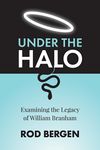
This website is regularly attacked by ministers and preachers in the Message, and most of the comments are derogatory:
Believe the sign... or believe the slander[1]
They're hypocrites. They don't even represent the very thing that their... their domain name says about them. They say they believe the sign, but they don't believe nothing. They become a faithless and a perverse generation given over to their carnal lust and their carnal desires. They don't even know what they stand for... their stand... they know what they stand against, but they don't know... they don't know nothing.[2]
What we rarely get is a thoughtful response to our research. Proverbs provides part of the answer:
Stupid people are more interested in answering than in hearing out the person who addresses them.[3]
When you are listening to someone, it’s possible to be convinced by the first speaker in a debate or a court case, but things may look different when you hear the opposition’s response. Some people have a greater interest in pontificating than in learning. Such a priority isn’t the way to wisdom, which relies on the activity of the ear.[4]
We are not calling all message ministers stupid, but the Bible does call people foolish who will not listen to an argument being raised. That is the case of many message ministers.
Sexual abuse in the Message
The reason that the founders of this website started to question the Message was the discovery that the past of the church had covered up the sexual abuse of a minor.
The cover up of sexual and domestic abuse in the Message is not particularly different from that of some denominations. But if the Message truly was "The Bride of Christ", they would be transparent and open on such issues. They're not.
We lay this terrible breach of moral responsibility directly at the feet of the ministers of the Message, who, through silence or defending those who have participated in the active cover-up of abuse, are complicit in this horrible sin.
We deal with this issue in the following articles:
- The Message and Sexual Abuse
- William Branham and sexual abuse
- Ed Daulton
- Leo Mercer
- Roger Rudin
- Why you should be concerned
Admissions, concessions, and strategic retreats
Some message ministers are sincere enough in their belief to honestly admit that William Branham made some significant errors. The following documents the admissions, concessions, and strategic retreats by Message ministers as evidence mounts against key claims of Branham's ministry. These are not attacks from outsiders — they are the words and actions of the movement's own leaders.
Why this matters
The Message movement claims that William Branham was an infallible, vindicated prophet whose every word was directly from God. But when confronted with documented evidence of failed prophecies, historical inaccuracies, and story inconsistencies, the ministers themselves are forced to retreat, redefine, and reinterpret — tacitly acknowledging the very problems they publicly deny.
This documents that pattern: named ministers making specific concessions, pastors who left after honest investigation, and the movement-wide retreat from claims that can no longer be defended. Every item below is sourced from public statements, published defenses, podcasts, and documented debates.
A methodological note on attributions. Most entries point at a single named pastor with a specific sermon date and a verbatim quote; those carry the standard inline audio clip and source URL. A second class of entries summarizes a position held in common by multiple Message pastors across multiple sermons — a written rollup of a converging pattern. Those composite entries cite the channels and sermon ranges that establish the pattern but do not carry a single audio clip, because the position is the aggregate. A third class — Joseph Branham's weekly letters (text-only by design), the Owen Jorgensen biography, the ChurchAges.net defense, the Bryan Smalls/Tim Pruitt/Jeff Jenkins written defenses — has no original audio because the source was never spoken; readers can verify those against the linked text. Where a single-pastor verbatim quote appears without an audio clip, the source recording was either offline at the time of publication or the verbatim text was condensed in editing; corrections welcomed.
The Pattern of Ministerial Retreat
- Assert boldly — Make the claim with absolute certainty: "THUS SAITH THE LORD," "perfectly fulfilled," "vindicated beyond question."
- Deny when challenged — When evidence contradicts the claim, first deny the evidence exists or accuse the questioner of having a "bad spirit."
- Minimize when denial fails — When the evidence becomes undeniable, minimize its importance: "The details don't matter," "you're missing the spirit of it."
- Redefine the claim — Change what was originally claimed so the new version can't be disproven: "It was a prediction, not a prophecy," "it was spiritual, not literal."
- Shift blame — Blame the questioner for "causing division," being "influenced by the enemy," or "applying the letter instead of the spirit."
- Move on silently — Eventually stop discussing the problematic claim entirely, hoping new converts will never learn about it.
The Details
Ministers on record
- Doug Baker
- Barry Coffey
- Allistair Francis
- Gerald Hughes
- Paul Lafontaine
- Donny Reagan
- George Smith
- Jesse Smith
- John Thornton
Message ministers mentioned on this website
We have responded to or mentioned the following message preachers:
- Edward Byskal
- Jason Demars
- Allistair Francis
- Bill Ivy
- A group of ministers from the "Junior Jackson" camp of the message
- Baruti Kasongo
- Amos Omoboriowo
- Isaac Noriega
- Don Parnell
- Tim Pruitt
- Donny Reagan
- Jesse Smith
- Jason Watkins
Footnotes
- ↑ Jesse Smith, 2024-04-15 - ANSWERING 6 Believe The Sign Questions Proving William Branham is a Genuine Prophet of God
- ↑ Bob Black, 2021-11-24 - Do You Take This Man
- ↑ John Goldingay, Proverbs, Ecclesiastes, and Song of Songs for Everyone, Old Testament for Everyone (Louisville, KY; London: Westminster John Knox Press; Society for Promoting Christian Knowledge, 2014), 83.
- ↑ John Goldingay, Proverbs, Ecclesiastes, and Song of Songs for Everyone, Old Testament for Everyone (Louisville, KY; London: Westminster John Knox Press; Society for Promoting Christian Knowledge, 2014), 83.