Don't you dare read it!
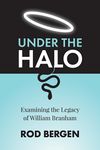
This article concerns a passage in "The Unchanging God With Unchanging Ways, Part 2," preached on December 7, 2025, by Tom Rae at Cloverdale Bibleway in Surrey, British Columbia. Timestamps refer to that recording. The doctrinal content of the same sermon is dealt with separately in Who do you say the son of man is?.
We have a number of editors on this website, and we don't usually attribute specific articles to individual editors. However, because of the subject matter of this article, we do want to attribute it to Rod Bergen, primary author and editor of Under The Halo.
Don't You Dare Read It
On the morning of December 7, 2025, Tom Rae stood in the pulpit at Cloverdale Bibleway and told his congregation to burn a book.
This is what he said, at [1:42:40]:
We got an unbeliever who used to be a song leader here write a book, Under the Halo. I want you to burn it if it ever comes by your way. Don't you dare read it, it's garbage. There's a halo and that's almighty God. Brother [Branham] said you blaspheme it, you're going to hell. That's what he said. Don't you blaspheme this pillar of fire. They don't know what they're talking about, because they've never had a revelation that's Christ up there.
I wrote the book. The description is accurate. I did lead worship at Cloverdale Bibleway… for over 35 years… and I did leave.
I am not going to spend this article arguing about whether I am an unbeliever. That question has no evidence attached to it and no way of being settled, which is precisely why it was raised. What I am going to do is take the twenty seconds above and look at what is actually in them.
There is not one argument in it
Read it again and count the claims about the book.
It is garbage. That is the entire case.
Not a sentence of it is quoted. Not a chapter is named. Not a footnote is challenged. Not a single factual assertion in over three hundred fifty pages is identified and answered. A congregation was told that a book is worthless by a man who has likely not even taken the time to read the book.
If Under the Halo is full of errors, they can be produced. It is a book of documents, dates, photographs, court records, and quotations, and every one of them can be checked by anyone with an internet connection. That is how it was written and that is what it is for. If a claim in it is wrong, show the claim, show the evidence, and I will correct it. I have done that before and I will do it again.
What happened instead was an instruction not to look.
When a man tells you to burn a book rather than answer it, you have learned something about the book and something about the man.
The instruction he gave forty minutes earlier
The book-burning is not the only piece of this in the sermon. It is the specific version of a general rule Tom Rae had already laid down at [58:05]:
Today we get inundated with so much information ... whether it's been on your phones, or whether it's over your radios, over the internet, on your iPads or your computer ... you must remember, saints of God, this is Satan's Eden. So everything that you're listening to, just put a grain of salt to it. It's not important. It's not important. Because it's only to influence your thinking. And there's only one thing that I would propagate to you this morning: God sent a message to give you the thought and mind of God on every situation.
Everything you might hear from anywhere else is discounted in advance. One source is exempt, and that source supplies the mind of God on every situation.
That is the frame. The book-burning is what the frame produces when a specific book comes near.
I would ask any member of that congregation to notice the shape of it. You were told that outside information exists to influence your thinking. You were then told not to read a particular book. In between, you were not told what the book says.
A body of teaching that can survive being examined does not need this. It has never needed it. Paul walked into the synagogue at Berea and the people there went home and checked him against the scriptures every day, and Luke calls them more noble for it (Acts 17:11). The apostle did not tell them to stop.
Auschwitz
I want to say this next part carefully, because it would be easy to say it cheaply and I do not intend to.
Forty minutes before the instruction to burn a book, in the same sermon, Tom Rae told his congregation about visiting Auschwitz with his son [1:00:44]. He described the piles of shoes and the shaved hair. He described the walls where people were shot. He said that as they came through the gate his son turned to him and said "Daddy, just don't talk to me," and that the two of them walked for two hours without speaking. He said the guide told them at the end that the only thing missing was the stench.
It is the most affecting passage in the sermon, and I do not doubt a word of it.
I am not comparing Tom Rae to anybody. I want to be completely clear about that, and anyone who reads this as that comparison has misread me on purpose.
What I am saying is this. A man who has stood in that place, and who was moved by it in a way he could still feel years later, told a room full of people to burn a book on the same Sunday morning. He would have recognised the instinct instantly in any other setting. He has seen where it goes. And in his own pulpit, about his own critics, it did not register at all.
That is worth understanding, because it is not a fact about Tom Rae's character. It is a fact about what a system can do to the judgment of a decent man who has given it his whole life. The reflex he would condemn anywhere else became invisible to him when it was pointed at me.
If you are sitting in that congregation, that is the thing to think about. Not what I believe. What happened to his hearing.
The one claim we can actually test
There is exactly one checkable statement in the passage. "There's a halo and that's almighty God."
The book is named for that photograph, so let us deal with it.
On January 24, 1950, in the Sam Houston Coliseum in Texas, a photograph was taken of William Branham standing at the podium with a band of light above his head. He paid to have it examined and afterwards made three claims about it:
- That the examiner, George J. Lacy, was "the head of the FBI in fingerprints and documents, the best there is in the world."
- That every other picture on the roll came out blank, and only the halo photograph developed.
- That the photograph was displayed in "the Religious Hall of Art, in Washington, DC, as the first photograph that was ever taken of a supernatural Being."
None of the three is true.
The FBI stated in 1974 that it had no knowledge of the Houston photograph and had never employed George J. Lacy. He was not the head of anything at the FBI, because he did not work there.
The other photographs on that roll were not blank. They were developed, and you can look at them on this website today.
And the light itself is best explained by an out-of-focus flood lamp in the background, badly over-exposed. Comparable photographs from the same coliseum and other venues show the same effect.[1]
That is what "don't you dare read it" is protecting you from.
Notice what Tom Rae did not do. He did not say that there is a Religious Hall of Art in Washington, DC. He did not say the other photographs are fakes. He did not say Lacy was FBI after all and here is the proof. He said the critics have never had a revelation.
"They've never had a revelation"
This is the last move in the passage and it is the most important one, because it is the move that makes the conversation impossible.
If the reason I disagree is that I lack a revelation, then no document I produce can count. Every fact becomes further evidence of my blindness. The FBI letter does not matter. The photographs do not matter. The dates do not matter. There is no possible finding that could register, because the disagreement has been relocated from the evidence to my soul.
That is not an argument. It is a way of not having one.
And it cuts both ways, which is the part that never gets said out loud. If a revelation is what settles a question of fact, then anybody with a revelation can settle any question of fact, in any direction, and there is no way to tell a true one from a false one. Tom Rae would not accept that reasoning from a Mormon missionary at his door. He should not offer it from his own pulpit.
The hell threat
One more thing in those twenty seconds. "Brother Branham said you blaspheme it, you're going to hell. That's what he said."
Notice the construction. The threat is delivered and then handed off. That's what he said.
If Tom Rae believes that people who examine the Houston photograph and conclude it shows a flood lamp are going to hell, he should say so in his own voice and take responsibility for it. If he does not believe it, he should not have said it from a pulpit to a room containing young people and grieving parents.
Quoting a dead man does not make it somebody else's sentence. He chose it, he read it out, and he aimed it.
An offer
So this is where it ends.
If you attend Cloverdale Bibleway, or any Message church, and you would like to read the book you were told to burn, send me an email. I will meet with you and give you a copy of my book for FREE (as long as you promise not to burn it before you read it). That is the only condition, and there will be no follow-up. Read it, check the footnotes, and throw it away or burn it afterward if you conclude it is garbage. You will at least have concluded it yourself.
I give away the book regularly. Two weeks before I wrote this article, a young man from the US emailed me, said he was going to be in Vancouver, and asked if we could meet because he had a lot of questions about the message. I met with him, bought him breakfast, gave him a copy of Under the Halo, and told him he was more than welcome to email me if he had any questions. We parted on good terms. Whether we talk again is up to him.
I have never told anybody to burn William Branham's sermons. I have quoted them at length, sourced them, dated them, and linked to the audio so that people can hear the man in his own voice and make up their own minds. That is the whole difference between what this website does and what happened in that pulpit on December 7.
One side is asking you to look and ask questions. The other is asking you not to.
You are allowed to check. You have always been allowed to check. The people who tell you otherwise are telling you something about their evidence, not about ours.
Footnotes
- ↑ Under the Halo, Introduction. The Houston photograph, Lacy's credentials, the 1974 FBI statement, and the other frames from the same roll are documented there with sources.