David K. Bernard - A Critical Analysis of his Major Publications

We have undertaken a critical analysis of most of David Bernard's major publications. This is the master list of our book reviews. You are on the page that is in bold. Click on the links below to go to particular book:
- Links to Bernard's books
- Analysis of Bernard's The Oneness of God
- Analysis of Bernard's The Oneness View of Jesus Christ
- Analysis of Appendix B to The Oneness View of Jesus Christ
- Analysis of Bernard's The Glory of God in the Face of Jesus Christ
- Analysis of Bernard's Essentials of Holiness
- Analysis of Bernard's Oneness and Trinity AD 100-300]
- Analysis of Bernard's The Trinitarian Controversy in the Fourth Century
Who is David Bernard?
David Bernard is an American Oneness Pentecostal theologian. He is the General Superintendent of the United Pentecostal Church International (UPCI), the largest Oneness Pentecostal organization with constituents worldwide. He has written multiple books on the subject of Oneness theology, including the subject of this series of articles, The Oneness of God.
What does the UPCI believe?
For those in (or formerly in) the Branham movement (referred to on this website as "the Message) or from a Message background, we would describe the UPCI as the Message without William Branham. Similar to the Message, they:
- deny the doctrine of the Trinity in favor of modalism.
- are extremely legalistic;
- require women to have long hair;
- forbid women to wear pants; and,
Unlike the Message, they believe:
- water baptism in the name of Jesus is required for salvation; and,
- speaking in tongues is required as evidence that a person is saved.
Is Oneness theology false doctrine?
Is Oneness theology false doctrine?
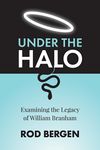
In Part 3 of our book, Under The Halo, we provide 5 characteristics of false doctrine:
- False doctrine is plausible;
- False doctrine is based on scripture;
- False doctrine is self-centered and self-focused.
- False doctrine is reductionist; and
- False doctrine is divisive.
We would now also add a 6th characteristic - false doctrine diverges significantly from the historic teaching of the Christian church.
All six are generally true of Oneness followers. The first three are rather obvious, but the last three deserve a bit more attention.
Reductionism
Reductionism is when truth is reduced or simplified to such an extent that the whole is lost. A portion of the truth becomes the main thing.
Here is Alan Hirsch on the subject:
- In its original meaning, the word heresy does not infer that someone is wrong or has believed a falsehood. Rather, it simply refers to a particular truth or belief that has been extracted from its true and complete context and is subsequently treated as if it were the whole truth. This explains why every heretic in the history of the church has had a verse or two of Scripture they rigidly hold to.
- Some of the sheep, and even some of the shepherds, may turn out to be wolves in disguise. And the attack will then take the form, not of direct contradiction or a clash of powers, but of distorting the truth. The greatest heresies do not come about by straightforward denial; most of the church will see that for what it is. They happen when an element which may even be important, but isn’t central, looms so large that people can’t help talking about it, fixating on it, debating different views of it as though this were the only thing that mattered.
- The point is that the so-called “heretic” really has (re)discovered some truth that has been lost, ignored, or suppressed. That is something to get excited about. However, the error in the heresy is in the exaggerated enthusiasm or preoccupation that ensues. The heretic becomes increasingly obsessive and sectarian by making the newly recovered particular truth into the whole truth. Its real meaning is obscured because it is separated from the greater Truth from which it has been extracted. Truth thereby becomes fragmented.[1]
This is very true within Oneness churches. They quote Acts 2:38 in almost every service. A reiteration of their divergent views on the Godhead and baptism also occurs in almost every service.
Division
Oneness theology leads to division. Oneness ministers will generally not associate with Trinitarians because they believe they are headed for hell. But what does Paul say about those who create division:
- I urge you, my brothers and sisters: watch out for those who cause divisions and upset people’s faith and go against the teaching which you have received. Keep away from them![2]\
- By the authority of our Lord Jesus Christ I appeal to all of you, my brothers and sisters, to agree in what you say, so that there will be no divisions among you. Be completely united, with only one thought and one purpose.[3]
- Give at least two warnings to those who cause divisions, and then have nothing more to do with them. 11You know that such people are corrupt, and their sins prove that they are wrong.[4]
Departure from the historical Christian faith
Oneness theology departs from historic Christianity at several foundational points, and the departures aren't minor refinements, they touch the core of who God is and how a person is saved.
The nature of God
Orthodox Christianity has confessed since the 4th century that God is one being in three co-equal, co-eternal persons — Father, Son, and Holy Spirit. Oneness theology rejects this entirely. Rather than three distinct persons, it teaches that Father, Son, and Holy Spirit are three titles or modes of a single person: Jesus. When Jesus prays to the Father, he's talking to himself in a different mode. This isn't a new idea — the early church debated and rejected it in the 3rd century under the name Modalism or Sabellianism. The church fathers who fought Arianism, Gnosticism, and every other major heresy also condemned this view, and for good reason: it requires you to flatten or explain away dozens of passages where the Father and Son relate to each other as genuinely distinct.
The eternal Son
In historic Christianity, the Son's relationship to the Father is eternal — not something that started at Bethlehem. Oneness theology teaches that "the Son" only refers to the incarnation. Before the virgin birth, there was no Son, only the Father. This collapses the eternal, relational dynamic within God that the Gospel of John opens with: "The Word was with God, and the Word was God" (John 1:1). "With" implies distinction. "Was God" implies unity. Oneness theology can only affirm half of that verse comfortably.
Baptismal formula
Matthew 28:19 records Jesus commanding baptism "in the name of the Father, and of the Son, and of the Holy Spirit." The church has used this formula for two thousand years. Oneness theology insists the word "name" is singular and therefore refers to Jesus alone, meaning the Trinitarian formula is invalid. By this logic, the vast majority of Christians in history — Catholic, Orthodox, Protestant — have never been properly baptized. That's a staggering claim, and it forces Oneness adherents into rebaptizing virtually every convert who comes from another tradition.
How a person is saved
This is where the departure becomes most pastoral. Historic Protestantism teaches salvation by grace through faith — justification is God's declaration of righteousness received through trust in Christ, not a sequence of ritual acts that must be performed correctly. Oneness theology, particularly in UPCI circles, teaches that salvation requires repentance, water baptism specifically in Jesus' name, and speaking in tongues as the initial physical evidence of receiving the Holy Spirit. Miss any element and your salvation is in question. This isn't just a different emphasis — it's a structurally different gospel, one where assurance is perpetually dependent on your experience and compliance rather than on Christ's finished work.
Tongues as the evidence
Historic Christianity has always recognized speaking in tongues as a genuine spiritual gift while never making it the required proof of salvation or Spirit-indwelling. Tying salvation to a specific experience creates a system where people who love Christ, trust him, and bear the fruit of the Spirit are told they don't actually have the Spirit — because they haven't spoken in tongues. That's a serious pastoral problem, and it's nowhere demanded in Scripture when you read the relevant texts in their full context rather than stringing together verses from Acts.
Taken together, these aren't quibbles about secondary doctrine. Oneness theology departs from what Christians across traditions — Catholic, Orthodox, and Protestant — have agreed on for centuries: who God is, who Christ is eternally, and how sinners come to be right with him. That consensus isn't a product of church politics. It's the result of the church reading the whole New Testament together and recognizing what it actually teaches.
Response to our analysis from David Bernard
We received copies of several of David Bernard's books from a former Message follower who retained a Oneness view of the Godhead after leaving the Message. We undertook an analysis of "The Oneness of God," as a response. The individual sent a copy of our analysis to David Bernard and he forwarded his response to us on May 28, 2026:
Thank you for the information.
I briefly examined [your] critique. It is thorough and articulate. I would just make a few comments.
- He often over-interprets what I say, trying to make me say more than I seek to say.
- He assumes I’m always being polemical when I’m not. He says Trinitarians accept many of my statements, as if I don’t realize this. But of course, I do. The book is not merely or primarily written to oppose Trinitarianism but to state the positive doctrine of God in Scripture. It also seeks to correct various other errors, such as Arianism and Unitarianism. To the extent that Trinitarians agree, well and good.
- He misunderstands my position as if I deny the two natures formulation of Chalcedon (deity and humanity of Christ in one person), which I don’t, although I prefer different terminology in some cases. He says Oneness and Trinitarianism face many of the same questions regarding the Incarnation and have similar answers, which is my point. That is, Trinitarianism isn’t required in order to answer them.
- My book is an entry-level discussion for general readers. He uses many typical Trinitarian philosophical, historical, and exegetical counter-arguments, to which I have responses in other works. For a fuller discussion of my views, answers to most of his points, and scholarly discussions, see my books The Oneness View of Jesus Christ, Oneness and Trinity AD 100-300, The Trinitarian Controversy in the Fourth Century, In the Name of Jesus, and The Glory of God in the Face of Jesus Christ (doctoral thesis).
David K. Bernard, DTh, JD
General Superintendent, United Pentecostal Church International
Our reply to David Bernard
We responded as follows:
May 29, 2026
Dear Dr. Bernard,
Subject: My Critique of The Oneness of God
Thank you for taking the time to read and respond. Your engagement is appreciated, and I will reply to each of your four points directly.
On "over-interpretation"
You suggest the critique frequently makes you say more than you intend. That may be, in specific instances — but this objection, as stated, cannot be proved either right or wrong. Without identifying which arguments were over-interpreted and how, "over-interpretation" functions as a general disclaimer rather than a substantive rebuttal. If there are specific passages where the critique misrepresents your position, I would genuinely welcome that correction and will address it directly. Vague concerns about tone or interpretive excess don't advance the conversation.
On whether the book is primarily polemical
You state that The Oneness of God is "not merely or primarily written to oppose Trinitarianism but to state the positive doctrine of God in Scripture." This is partially fair, the book does include constructive biblical exposition. However, Chapter 11 is a historical argument that Trinitarianism was not "solidly established prior to the end of the fourth century" and that early Christians held essentially Oneness views. Chapter 12 is explicitly titled "Trinitarianism: An Evaluation" and opens with the assertion that "the doctrine of the Trinity conflicts with the biblical doctrine of one God." These are not incidental chapters. They occupy a significant portion of the book and constitute direct polemical engagement with Trinitarian theology.
The critique's engagement with those chapters as polemical is therefore not an assumption, it is a reading of what you actually wrote. If Trinitarians agree with your positive biblical exposition where they can, that is indeed welcome. But the areas of disagreement are precisely the areas your own chapters flag as points of conflict, and those are what I responded to.
On Chalcedon and the two natures
You clarify that you do not deny the Chalcedonian formulation of two natures, divine and human in one person, though you prefer different terminology. This clarification is noted and accepted at face value.
But it actually sharpens rather than resolves the problem. The difficulty is not whether you affirm two natures in Christ. The difficulty is what "person" means in your system versus what it means in Chalcedonian usage. Chalcedon uses "person" (hypostasis) to designate one of three distinct subsistences within the Godhead. In your framework, there is only one divine person — and that person is Jesus Christ, who is simultaneously identified with the Father. The word "person" is therefore doing entirely different theological work in your system than it does in Chalcedon's.
You cannot simply affirm the language of Chalcedon while radically redefining its central term and then claim agreement. As Gregory Boyd demonstrates in Oneness Pentecostals and the Trinity, the Oneness understanding of "person" collapses the distinction that Chalcedon's formula was specifically designed to preserve — namely, that the eternal Son is a distinct hypostasis from the Father, not a mode or role of the same person. Affirming "two natures, one person" means something categorically different in a Oneness framework than it does in a Trinitarian one.
The point that Trinitarianism and Oneness theology face "similar questions" about the Incarnation and offer "similar answers" is not as much of a concession as it appears as you suggest. Yes, both affirm a genuine Incarnation. But Oneness theology faces a unique problem Trinitarianism does not: if Jesus is the Father, to whom was he praying in Gethsemane? Who forsook whom at Calvary? Trinitarianism's answer — that the eternal Son, a distinct person from the Father, took on human nature and experienced genuine relational communion with the Father — is coherent. The Oneness response requires either modalist redefinitions of those prayer passages or an appeal to the "human nature" of Christ doing the praying, which raises the question of whether that prayer has any genuine divine addressee at all.
On the book being "entry-level" and your other works
With respect, Dr. Bernard, this response cannot bear the weight you place on it. The Oneness of God is your most widely distributed and influential work. It is used in United Pentecostal Church International (UPCI) Bible schools, distributed to seekers and new converts, and constitutes the primary theological statement of Oneness doctrine for the majority of your readers. If its arguments are incomplete, that is not the critic's problem — it is the book's problem.
The invitation to consult five additional books as a precondition for engagement is an argumentative strategy that would permanently insulate any position from scrutiny. There will always be another work where the fuller answer resides. The appropriate response is to identify, in specific terms, where the critique is answered in those other works so that the conversation can continue on concrete ground. A blanket referral to a bibliography is not a rebuttal. Furthermore, several of the critique's core arguments are not peripheral points that require doctoral-level engagement to address — they are fundamental exegetical and historical challenges that The Oneness of God itself raises and should be capable of sustaining. The claim in Chapter 11, for instance, that "the vast majority of all Christians in the early post-apostolic church embraced Oneness views" is a serious historical assertion made in the book under critique, and it deserves to be defended in the terms in which it was offered.
I remain open to continued dialogue and would welcome specific responses to the substantive exegetical and historical arguments raised. The goal here is not polemics for its own sake — it is the truth of who God is and what Scripture actually teaches.
Respectfully,
Rod Bergen
We have not received a response to our note above, although we did not send it directly as it went through the brother who originally contacted Dr. Bernard.
However, we have expanded our review to include a review of most of Dr. Bernard's books. While we don't expect a response, we have emailed his office to ensure he is aware of our expanded review.
- ↑ Alan Hirsch and Mark Nelson, Reframation: Seeing God, People, and Mission through Reenchanted Frames (100 Movements Publishing, 2019, 47-48
- ↑ American Bible Society, The Holy Bible: The Good News Translation, 2nd ed. (New York: American Bible Society, 1992), Ro 16:17.
- ↑ American Bible Society, The Holy Bible: The Good News Translation, 2nd ed. (New York: American Bible Society, 1992), 1 Co 1:10.
- ↑ American Bible Society, The Holy Bible: The Good News Translation, 2nd ed. (New York: American Bible Society, 1992), Tt 3:10–11.